Miriam Griffin says in her standard modern biography of Seneca that The evidence for Seneca's life before his exile in 41 is so slight, and the potential interest of these years, for social history as well as for biography, is so great that few writers on Seneca have resisted the temptation to eke out knowledge with imagination.
It is thus necessary to regard what one reads as alleged fact with extreme skepticism.
Griffin infers from ancient sources that Seneca was born in either 8, 4, or 1 BCE. She thinks he was born between[vague] 4 and 1 BCE and was resident in Rome by 5 CE. Seneca says that he was carried to Rome in the arms of his mother's stepsister. Griffin says that allowing for rhetorical exaggeration means "it is fair to conclude that Seneca was in Rome as a very small boy."
His family was from Cordoba in Hispania (the Iberian Peninsula), and one might infer that he may have been born there, although there is no documentary evidence for it.
He was the second son of Helvia and Lucius Annaeus Seneca (there is no ancient evidence for the name Marcus),[vague] the wealthy rhetorician known as Seneca the Elder. Griffin says that it is probable that the Annaei came from Etruria or the "area further east towards Illyria." There is no way of knowing when the family came to Spain.
Seneca's older brother, Gallio, became proconsul in the Roman province of Achaea. His younger brother Annaeus Mela's son was Marcus Annaeus Lucanus became the poet Lucan.
At Rome he was trained in rhetoric and was introduced to Hellenized Stoic philosophy by Attalus and Sotion. Seneca's own writings describe his poor health. At some stage he was nursed by his aunt; as she was in Egypt from 16 to 31 CE, he must have at least visited and perhaps lived for a period in Hellenistic Egypt.
Seneca and his aunt returned to Rome in 31, and she helped him in his campaign for his first magistracy.
Caligula began his first year as emperor in 38, and there was a severe conflict between him and Seneca; the emperor is said to have spared his life only because he expected Seneca's natural life to be near its end.
In 41, Emperor Claudius succeeded Caligula, and then, at the behest of his wife Messalina, banished Seneca to Corsica on a charge of adultery with Julia Livilla. Seneca spent his exile in philosophical and natural study (a life counseled by Roman Stoic thought) and wrote the Consolations, fulfilling a request for the text made by his sons for the sake of posterity. In 49, Claudius' new wife Agrippina had Seneca recalled to Rome to tutor her son Nero, then 12 years old; on Claudius' death in 54, she secured Nero's recognition as emperor, rather than Claudius' son Britannicus.
From 54 to 62, Seneca acted as Nero's advisor, together with the praetorian prefect Sextus Afranius Burrus. Seneca's influence was said to be especially strong in the first year.[5] Many historians consider Nero's early rule with Seneca and Burrus to be quite competent. However, over time, Seneca and Burrus lost their influence over Nero. In 59 they had reluctantly agreed to Agrippina's murder, and afterward Seneca wrote a dishonest[vague] exculpation of Nero to the Senate.[6] With the death of Burrus in 62 and accusations[vague] of embezzlement, Seneca retired and devoted his time again to study and writing.
Luca Giordano, The death of Seneca (1684)
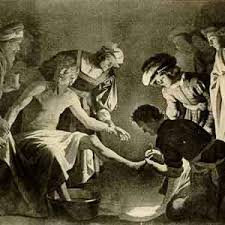
In 65, Seneca was caught up in the aftermath of the Pisonian conspiracy, a plot to kill Nero. Although it is unlikely that he conspired, he was ordered by Nero to kill himself. He followed tradition by severing several veins in order to bleed to death, and his wife Pompeia Paulina attempted to share his fate. Tacitus (writing in Book XV, Chapters 60 through 64 of his Annals, a generation later, after the Julio-Claudian emperors) gives an account of the suicide, perhaps, in light of Tacitus's Republican sympathies, somewhat romanticized. According to it, Nero ordered for Seneca's wife to be saved. Her wounds were bound up and she made no further attempt to kill herself. As for Seneca himself, his age and diet were blamed for slow loss of blood, and extended pain rather than a quick death; taking poison was also not fatal. After dictating his last words to a scribe, and with a circle of friends attending him in his home, he immersed himself in a warm bath, which was expected to speed blood flow and ease his pain. Tacitus, however, in his Annals of Imperial Rome says that Seneca suffocated by the vapor rising from the bath. “He was then carried into a bath, with the steam of which he was suffocated, and he was burnt without any of the usual funeral rites. So he had directed in a codicil of his will, even when in the height of his wealth and power he was thinking of life’s close
Source : Wikipedia.org
It is thus necessary to regard what one reads as alleged fact with extreme skepticism.
Griffin infers from ancient sources that Seneca was born in either 8, 4, or 1 BCE. She thinks he was born between[vague] 4 and 1 BCE and was resident in Rome by 5 CE. Seneca says that he was carried to Rome in the arms of his mother's stepsister. Griffin says that allowing for rhetorical exaggeration means "it is fair to conclude that Seneca was in Rome as a very small boy."
His family was from Cordoba in Hispania (the Iberian Peninsula), and one might infer that he may have been born there, although there is no documentary evidence for it.
He was the second son of Helvia and Lucius Annaeus Seneca (there is no ancient evidence for the name Marcus),[vague] the wealthy rhetorician known as Seneca the Elder. Griffin says that it is probable that the Annaei came from Etruria or the "area further east towards Illyria." There is no way of knowing when the family came to Spain.
Seneca's older brother, Gallio, became proconsul in the Roman province of Achaea. His younger brother Annaeus Mela's son was Marcus Annaeus Lucanus became the poet Lucan.
At Rome he was trained in rhetoric and was introduced to Hellenized Stoic philosophy by Attalus and Sotion. Seneca's own writings describe his poor health. At some stage he was nursed by his aunt; as she was in Egypt from 16 to 31 CE, he must have at least visited and perhaps lived for a period in Hellenistic Egypt.
Seneca and his aunt returned to Rome in 31, and she helped him in his campaign for his first magistracy.
Caligula began his first year as emperor in 38, and there was a severe conflict between him and Seneca; the emperor is said to have spared his life only because he expected Seneca's natural life to be near its end.
In 41, Emperor Claudius succeeded Caligula, and then, at the behest of his wife Messalina, banished Seneca to Corsica on a charge of adultery with Julia Livilla. Seneca spent his exile in philosophical and natural study (a life counseled by Roman Stoic thought) and wrote the Consolations, fulfilling a request for the text made by his sons for the sake of posterity. In 49, Claudius' new wife Agrippina had Seneca recalled to Rome to tutor her son Nero, then 12 years old; on Claudius' death in 54, she secured Nero's recognition as emperor, rather than Claudius' son Britannicus.
From 54 to 62, Seneca acted as Nero's advisor, together with the praetorian prefect Sextus Afranius Burrus. Seneca's influence was said to be especially strong in the first year.[5] Many historians consider Nero's early rule with Seneca and Burrus to be quite competent. However, over time, Seneca and Burrus lost their influence over Nero. In 59 they had reluctantly agreed to Agrippina's murder, and afterward Seneca wrote a dishonest[vague] exculpation of Nero to the Senate.[6] With the death of Burrus in 62 and accusations[vague] of embezzlement, Seneca retired and devoted his time again to study and writing.
Luca Giordano, The death of Seneca (1684)
In 65, Seneca was caught up in the aftermath of the Pisonian conspiracy, a plot to kill Nero. Although it is unlikely that he conspired, he was ordered by Nero to kill himself. He followed tradition by severing several veins in order to bleed to death, and his wife Pompeia Paulina attempted to share his fate. Tacitus (writing in Book XV, Chapters 60 through 64 of his Annals, a generation later, after the Julio-Claudian emperors) gives an account of the suicide, perhaps, in light of Tacitus's Republican sympathies, somewhat romanticized. According to it, Nero ordered for Seneca's wife to be saved. Her wounds were bound up and she made no further attempt to kill herself. As for Seneca himself, his age and diet were blamed for slow loss of blood, and extended pain rather than a quick death; taking poison was also not fatal. After dictating his last words to a scribe, and with a circle of friends attending him in his home, he immersed himself in a warm bath, which was expected to speed blood flow and ease his pain. Tacitus, however, in his Annals of Imperial Rome says that Seneca suffocated by the vapor rising from the bath. “He was then carried into a bath, with the steam of which he was suffocated, and he was burnt without any of the usual funeral rites. So he had directed in a codicil of his will, even when in the height of his wealth and power he was thinking of life’s close
Source : Wikipedia.org


