Showing posts with label Biographies. Show all posts

Sunday, November 15, 2009

Seneca Biography


Miriam Griffin says in her standard modern biography of Seneca that The evidence for Seneca's life before his exile in 41 is so slight, and the potential interest of these years, for social history as well as for biography, is so great that few writers on Seneca have resisted the temptation to eke out knowledge with imagination.

It is thus necessary to regard what one reads as alleged fact with extreme skepticism.

Griffin infers from ancient sources that Seneca was born in either 8, 4, or 1 BCE. She thinks he was born between[vague] 4 and 1 BCE and was resident in Rome by 5 CE. Seneca says that he was carried to Rome in the arms of his mother's stepsister. Griffin says that allowing for rhetorical exaggeration means "it is fair to conclude that Seneca was in Rome as a very small boy."

His family was from Cordoba in Hispania (the Iberian Peninsula), and one might infer that he may have been born there, although there is no documentary evidence for it.

He was the second son of Helvia and Lucius Annaeus Seneca (there is no ancient evidence for the name Marcus),[vague] the wealthy rhetorician known as Seneca the Elder. Griffin says that it is probable that the Annaei came from Etruria or the "area further east towards Illyria." There is no way of knowing when the family came to Spain.

Seneca's older brother, Gallio, became proconsul in the Roman province of Achaea. His younger brother Annaeus Mela's son was Marcus Annaeus Lucanus became the poet Lucan.

At Rome he was trained in rhetoric and was introduced to Hellenized Stoic philosophy by Attalus and Sotion. Seneca's own writings describe his poor health. At some stage he was nursed by his aunt; as she was in Egypt from 16 to 31 CE, he must have at least visited and perhaps lived for a period in Hellenistic Egypt.

Seneca and his aunt returned to Rome in 31, and she helped him in his campaign for his first magistracy.

Caligula began his first year as emperor in 38, and there was a severe conflict between him and Seneca; the emperor is said to have spared his life only because he expected Seneca's natural life to be near its end.

In 41, Emperor Claudius succeeded Caligula, and then, at the behest of his wife Messalina, banished Seneca to Corsica on a charge of adultery with Julia Livilla. Seneca spent his exile in philosophical and natural study (a life counseled by Roman Stoic thought) and wrote the Consolations, fulfilling a request for the text made by his sons for the sake of posterity. In 49, Claudius' new wife Agrippina had Seneca recalled to Rome to tutor her son Nero, then 12 years old; on Claudius' death in 54, she secured Nero's recognition as emperor, rather than Claudius' son Britannicus.

From 54 to 62, Seneca acted as Nero's advisor, together with the praetorian prefect Sextus Afranius Burrus. Seneca's influence was said to be especially strong in the first year.[5] Many historians consider Nero's early rule with Seneca and Burrus to be quite competent. However, over time, Seneca and Burrus lost their influence over Nero. In 59 they had reluctantly agreed to Agrippina's murder, and afterward Seneca wrote a dishonest[vague] exculpation of Nero to the Senate.[6] With the death of Burrus in 62 and accusations[vague] of embezzlement, Seneca retired and devoted his time again to study and writing.
Luca Giordano, The death of Seneca (1684)

In 65, Seneca was caught up in the aftermath of the Pisonian conspiracy, a plot to kill Nero. Although it is unlikely that he conspired, he was ordered by Nero to kill himself. He followed tradition by severing several veins in order to bleed to death, and his wife Pompeia Paulina attempted to share his fate. Tacitus (writing in Book XV, Chapters 60 through 64 of his Annals, a generation later, after the Julio-Claudian emperors) gives an account of the suicide, perhaps, in light of Tacitus's Republican sympathies, somewhat romanticized. According to it, Nero ordered for Seneca's wife to be saved. Her wounds were bound up and she made no further attempt to kill herself. As for Seneca himself, his age and diet were blamed for slow loss of blood, and extended pain rather than a quick death; taking poison was also not fatal. After dictating his last words to a scribe, and with a circle of friends attending him in his home, he immersed himself in a warm bath, which was expected to speed blood flow and ease his pain. Tacitus, however, in his Annals of Imperial Rome says that Seneca suffocated by the vapor rising from the bath. “He was then carried into a bath, with the steam of which he was suffocated, and he was burnt without any of the usual funeral rites. So he had directed in a codicil of his will, even when in the height of his wealth and power he was thinking of life’s close

Source : Wikipedia.org
read more...

Thursday, November 5, 2009

Oprah Winfrey Biography


Oprah Winfrey came from a humble background to become one of America's most influential women. Winfrey has amassed a great fortune through her media and publishing interests and uses her fame and wealth to positively influence the lives of people in need.

Born Orpah (after a character from the Bible) Winfrey on January 29, 1954 in Kosciusko, Mississippi - USA, but now goes by the name of Oprah. At a young age Winfrey's parents separated and sent her to live with grandparents in very poor surroundings until the age of 6 when she moved to live with her mother. She was consequently se-xually mol-ested by male relatives at a young age and endured the hardship up until she was 14 when Winfrey moved to live with her father in Nashville Tennessee.

Living with her father did not eliminate her problems even though he was loving (yet strict) towards her. Winfrey struggled with dr-ugs and rebellious behavior and lost a baby after giving birth to it prematurely. Although her wild behavior conflicted with her father's strict rules and high standards she eventually began to settle after being awarded a University Scholarship.

"I knew there was a way out. I knew there was another kind of life because I had read about it. I knew there were other places, and there was another way of being." Oprah Winfrey

Winfrey studied at the Tennessee State University and received a BA in Speech and Performing Arts. Her father's high standards inspired her to aim for and achieve more from life. Winfrey became involved in several groups and pursued her interests in media and journalism while at University. Even though her early years in life where filled with hardship, she was always gifted with intelligence and she graduated as an honors student.

Oprah Winfrey's career in the media industry began as a news anchor and reporter for a television station in Nashville (although she also worked in radio during high school as a newscaster). She was the first black African American woman television news anchor to work in Nashville on the WTVF-TV station at the young age of 19. Winfrey never felt comfortable in her position as a news anchor and only began to enjoy her work when she was moved to the early morning talk show "People are Talking" at WJZ-TV in Baltimore where she was able to be herself and express her own opinions and share her true feelings about topics that moved her.

Winfrey's career really began to take off after moving to Chicago in 1984 to host "AM Chicago", an early morning talk show at WLS-TV's. It went on to become the number one ranked talk show shortly after she started and it was renamed "The Oprah Winfrey Show" after one year.

The Oprah Winfrey Show went on to become one of the most successful and highest ranked television talk show programs in history. The program is viewed by more than 20 million Americans (USA) every week and broadcast Internationally to more than one hundred countries worldwide. Winfrey's production company "Harpo Productions, Inc" produces the program and she is the host.

The daytime talk show focuses on issues close to Winfrey's heart and she has continued to cover topics of value to her mostly female audience for more than 17 successful seasons of broadcasting. The Oprah Winfrey Show started the wildly influential "Oprah's Book Club" in 1996 where Oprah endorses what she considers to be books of value. Books that received the Oprah endorsement often suddenly went to number 1.

Winfrey's business and personal interests are wide ranging and she has managed to accomplish success in several areas. Apart from being a successful Talk show host she is also a producer, successful actress, Founder of the successful "O, the Oprah Magazine", co founder of "Oxygen Media", and a generous Philanthropist. Her entrepreneurial spirit and desire to change society for the better have brought her and her numerous companies many awards and achievements.

"What material success does is provide you with the ability to concentrate on other things that really matter. And that is being able to make a difference, not only in your own life, but in other people's lives." Oprah Winfrey

Oprah Winfrey continues to follow her dreams through her many business and media interests. She is one of the wealthiest women in the United States of America and is regularly placed high up on the Forbes magazine Rich List each year. Winfrey continues to influence and inspire people worldwide with her example of overcoming great odds to achieve great success financially, spiritually and socially.

read more...

Aristotle Biography

Aristotle, one of Plato's greatest students, was born in 384 BC. Aristotle's father was a physician to the king of Mecadonia, and when Aristotle was seven years old, his father sent him to study at the Academy. He was there at the beginning as a student, then became a researcher and finally a teacher. He seemed to adopted and developed Platonic ideas while there and to have expressed them in dialogue form. When Plato died, Plato willed the Academy not to Aristotle, but to his nephew Speusippus. Aristotle then left Athens with Xenocrates to go to Assos, in Asia Minor, where he opened a branch of the Academy. This Academy focused more on biology than its predecessor that relied on mathematics.

There he met Hermias, another former student of Plato, who had become king of Assos. Aristotle married Hermias niece, Pythias, who died ten years later. During these years in Assos, Aristotle started to break away from Platonism and developed his own ideas.

King Philip of Macedonia invited Aristotle to the capitol around 343 BC to tutor his thirteen-ear-old don, Alexander. Tutoring Alexander in the Academy in Assos, Aristotle still remained the president of the Academy. In 359 BC, Alexander's father, King Philip decided to set off to subdue the Greek city-states, and left Alexander in charge, thus stopping Aristotle's tutoring of Alexander.

King Philip was then murdered, in 336 BC, and Alexander then became king. He mobilized his father's great army and subdued some city-states, thus becoming "Alexander The Great".

In 335 BC, Aristotle returned to Athens. Speusippus had died, but Aristotle was again not given the presidency of the Academy in Athens, instead, it was given to one of his colleagues Xenocrates. So, Aristotle founded his own school this time, it was named the Lyceum, named after Apollo Lyceus. In 323 BC, twelve years after founding the Lyceum, Alexander the Great died. In Greece resentment against the Macedonia hegemony seethed and riots broke out. Aristotle was accused of impiety, and his life become in serious jeopardy. So he left Athens, and went to his late mother's estate at Chalcis on the island of Euboea. He died there in the next year, 322 BC.
read more...

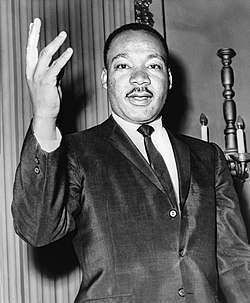
Martin Luther King, Jr Biography


Martin Luther King, Jr. (January 15, 1929 – April 4, 1968) was an American clergyman, activist and prominent leader in the African-American civil rights movement. His main legacy was to secure progress on civil rights in the United States, and he has become a human rights icon: King is recognized as a martyr by two Christian churches.
A Baptist minister, King became a civil rights activist early in his career. He led the 1955 Montgomery Bus Boycott and helped found the Southern Christian Leadership Conference in 1957, serving as its first president. King's efforts led to the 1963 March on Washington, where King delivered his "I Have a Dream" speech. There, he raised public consciousness of the civil rights movement and established himself as one of the greatest orators in U.S. history.
In 1964, King became the youngest person to receive the Nobel Peace Prize for his work to end racial segregation and racial discrimination through civil disobedience and other non-violent means. By the time of his death in 1968, he had refocused his efforts on ending poverty and opposing the Vietnam War, both from a religious perspective. King was assassinated on April 4, 1968, in Memphis, Tennessee. He was posthumously awarded the Presidential Medal of Freedom in 1977 and Congressional Gold Medal in 2004; Martin Luther King, Jr. Day was established as a U.S. national holiday in 1986.
read more...

Tuesday, October 27, 2009

Biography Benjamin franklin


Benjamin Franklin was born in Boston on January 17, 1706. He was the tenth son of soap maker, Josiah Franklin. Benjamin's mother was Abiah Folger, the second wife of Josiah. In all, Josiah would father 17 children.

Josiah intended for Benjamin to enter into the clergy. However, Josiah could only afford to send his son to school for one year and clergymen needed years of schooling. But, as young Benjamin loved to read he had him apprenticed to his brother James, who was a printer. After helping James compose pamphlets and set type which was grueling work, 12-year-old Benjamin would sell their products in the streets.

Apprentice Printer

When Benjamin was 15 his brother started The New England Courant the first "newspaper" in Boston. Though there were two papers in the city before James's Courant, they only reprinted news from abroad. James's paper carried articles, opinion pieces written by James's friends, advertisements, and news of ship schedules.

Franklin as printer

Benjamin wanted to write for the paper too, but he knew that James would never let him. After all, Benjamin was just a lowly apprentice. So Ben began writing letters at night and signing them with the name of a fictional widow, Silence Dogood. Dogood was filled with advice and very critical of the world around her, particularly concerning the issue of how women were treated. Ben would sneak the letters under the print shop door at night so no one knew who was writing the pieces. They were a smash hit, and everyone wanted to know who was the real "Silence Dogood."

After 16 letters, Ben confessed that he had been writing the letters all along. While James's friends thought Ben was quite precocious and funny, James scolded his brother and was very jealous of the attention paid to him.

Before long the Franklins found themselves at odds with Boston's powerful Puritan preachers, the Mathers. Smallpox was a deadly disease in those times, and the Mathers supported inoculation; the Franklins' believed inoculation only made people sicker. And while most Bostonians agreed with the Franklins, they did not like the way James made fun of the clergy, during the debate. Ultimately, James was thrown in jail for his views, and Benjamin was left to run the paper for several issues.

Upon release from jail, James was not grateful to Ben for keeping the paper going. Instead he kept harassing his younger brother and administering beatings from time to time. Ben could not take it and decided to run away in 1723.

Escape to Philadelphia


Philadelphia

Running away was illegal. In early America, people all had to have a place in society and runaways did not fit in anywhere. Regardless Ben took a boat to New York where he hoped to find work as a printer. He didn't, and walked across New Jersey, finally arriving in Philadelphia via a boat ride. After debarking, he used the last of his money to buy some rolls. He was wet, disheveled, and messy when his future wife, Deborah Read, saw him on that day, October, 6, 1723. She thought him odd-looking, never dreaming that seven years later they would be married.

Franklin found work as an apprentice printer. He did so well that the governor of Pennsylvania promised to set him up in business for himself if young Franklin would just go to London to buy fonts and printing equipment. Franklin did go to London, but the governor reneged on his promise and Benjamin was forced to spend several months in England doing print work.

Benjamin had been living with the Read family before he left for London. Deborah Read, the very same girl who had seen young Benjamin arrive in Philadelphia, started talking marriage, with the young printer. But Ben did not think he was ready. While he was gone, she married another man.

Upon returning to Philadelphia, Franklin tried his hand at helping to run a shop, but soon went back to being a printer's helper. Franklin was a better printer than the man he was working for, so he borrowed some money and set himself up in the printing business. Franklin seemed to work all the time, and the citizens of Philadelphia began to notice the diligent young businessman. Soon he began getting the contract to do government jobs and started thriving in business.

In 1728, Benjamin fathered a child named William. The mother of William is not known. However, in 1730 Benjamin married his childhood sweetheart, Deborah Read. Deborah's husband had run off, and now she was able to marry.

In addition to running a print shop, the Franklins also ran their own store at this time, with Deborah selling everything from soap to fabric. Ben also ran a book store. They were quite enterprising.

The Pennsylvania Gazette

Join or Die

In 1729, Benjamin Franklin bought a newspaper, the Pennsylvania Gazette. Franklin not only printed the paper, but often contributed pieces to the paper under aliases. His newspaper soon became the most successful in the colonies. This newspaper, among other firsts, would print the first political cartoon, authored by Ben himself.

During the 1720s and 1730s, the side of Franklin devoted to public good started to show itself. He organized the Junto, a young working-man's group dedicated to self- and-civic improvement. He joined the Masons. He was a very busy man socially.

Poor Richard's Almanack

Poor Richard's Almanack

But Franklin thrived on work. In 1733 he started publishing Poor Richard's Almanack. Almanacs of the era were printed annually, and contained things like weather reports, recipes, predictions and homilies. Franklin published his almanac under the guise of a man named Richard Saunders, a poor man who needed money to take care of his carping wife. What distinguished Franklin's almanac were his witty aphorisms and lively writing. Many of the famous phrases associated with Franklin, such as, "A penny saved is a penny earned" come from Poor Richard.

Fire Prevention

Franklin

Franklin continued his civic contributions during the 1730s and 1740s. He helped launch projects to pave, clean and light Philadelphia's streets. He started agitating for environmental clean up. Among the chief accomplishments of Franklin in this era was helping to launch the Library Company in 1731. During this time books were scarce and expensive. Franklin recognized that by pooling together resources, members could afford to buy books from England. Thus was born the nation's first subscription library. In 1743, he helped to launch the American Philosophical Society, the first learned society in America. Recognizing that the city needed better help in treating the sick, Franklin brought together a group who formed the Pennsylvania Hospital in 1751. The Library Company, Philosophical Society, and Pennsylvania Hospital are all in existence today.


Pennsylvania Hospital

Fires were very dangerous threat to Philadelphians, so Franklin set about trying to remedy the situation. In 1736, he organized Philadelphia's Union Fire Company, the first in the city. His famous saying, "An ounce of prevention is worth a pound of cure," was actually fire-fighting advice.

Those who suffered fire damage to their homes often suffered irreversible economic loss. So, in 1752, Franklin helped to found the Philadelphia Contribution for Insurance Against Loss by Fire. Those with insurance policies were not wiped out financially. The Contributionship is still in business today.

Electricity

Franklin's printing business was thriving in this 1730s and 1740s. He also started setting up franchise printing partnerships in other cities. By 1749 he retired from business and started concentrating on science, experiments, and inventions. This was nothing new to Franklin. In 1743, he had already invented a heat-efficient stove — called the Franklin stove — to help warm houses efficiently. As the stove was invented to help improve society, he refused to take out a patent.

swim fins

Among Franklin's other inventions are swim fins, the glass armonica (a musical instrument) and bifocals.

In the early 1750's he turned to the study of electricity. His observations, including his kite experiment which verified the nature of electricity and lightning brought Franklin international fame.

The Political Scene

Politics became more of an active interest for Franklin in the 1750s. In 1757, he went to England to represent Pennsylvania in its fight with the descendants of the Penn family over who should represent the Colony. He remained in England to 1775, as a Colonial representative not only of Pennsylvania, but of Georgia, New Jersey and Massachusetts as well.

Early in his time abroad, Franklin considered himself a loyal Englishman. England had many of the amenities that America lacked. The country also had fine thinkers, theater, witty conversation — things in short supply in America. He kept asking Deborah to come visit him in England. He had thoughts of staying there permanently, but she was afraid of traveling by ship.


Stamp Act

In 1765, Franklin was caught by surprise by America's overwhelming opposition to the Stamp Act. His testimony before Parliament helped persuade the members to repeal the law. He started wondering if America should break free of England. Franklin, though he had many friends in England, was growing sick of the corruption he saw all around him in politics and royal circles. Franklin, who had proposed a plan for united colonies in 1754, now would earnestly start working toward that goal.

Franklin's big break with England occurred in the "Hutchinson Affair." Thomas Hutchinson was an English-appointed governor of Massachusetts. Although he pretended to take the side of the people of Massachusetts in their complaints against England, he was actually still working for the King. Franklin got a hold of some letters in which Hutchinson called for "an abridgment of what are called English Liberties" in America. He sent the letters to America where much of the population was outraged. After leaking the letters Franklin was called to Whitehall, the English Foreign Ministry, where he was condemned in public.

A New Nation

Franklin

Franklin came home.

He started working actively for Independence. He naturally thought his son William, now the Royal governor of New Jersey, would agree with his views. William did not. William remained a Loyal Englishman. This caused a rift between father and son which was never healed.

Franklin was elected to the Second Continental Congress and worked on a committee of five that helped to draft the Declaration of Independence. Though much of the writing is Thomas Jefferson's, much of the contribution is Franklin's. In 1776 Franklin signed the Declaration, and afterward sailed to France as an ambassador to the Court of Louis XVI.


Franklin in France

The French loved Franklin. He was the man who had tamed lightning, the humble American who dressed like a backwoodsman but was a match for any wit in the world. He spoke French, though stutteringly. He was a favorite of the ladies. Several years earlier his wife Deborah had died, and Benjamin was now a notorious flirt.

In part via Franklin's popularity, the government of France signed a Treaty of Alliance with the Americans in 1778. Franklin also helped secure loans and persuade the French they were doing the right thing. Franklin was on hand to sign the Treaty of Paris in 1783, after the Americans had won the Revolution.

Now a man in his late seventies, Franklin returned to America. He became President of the Executive Council of Pennsylvania. He served as a delegate to the Constitutional Convention and signed the Constitution. One of his last public acts was writing an anti-slavery treatise in 1789.

Franklin died on April 17, 1790 at the age of 84. 20,000 people attended the funeral of the man who was called, "the harmonious human multitude."

His electric personality, however, still lights the world.

read more...

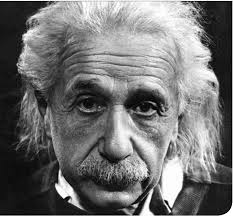
Biography Albert einstein


Albert Einstein was born at Ulm, in Württemberg, Germany, on March 14, 1879. Six weeks later the family moved to Munich, where he later on began his schooling at the Luitpold Gymnasium. Later, they moved to Italy and Albert continued his education at Aarau, Switzerland and in 1896 he entered the Swiss Federal Polytechnic School in Zurich to be trained as a teacher in physics and mathematics. In 1901, the year he gained his diploma, he acquired Swiss citizenship and, as he was unable to find a teaching post, he accepted a position as technical assistant in the Swiss Patent Office. In 1905 he obtained his doctor’s degree.

During his stay at the Patent Office, and in his spare time, he produced much of his remarkable work and in 1908 he was appointed Privatdozent in Berne. In 1909 he became Professor Extraordinary at Zurich, in 1911 Professor of Theoretical Physics at Prague, returning to Zurich in the following year to fill a similar post. In 1914 he was appointed Director of the Kaiser Wilhelm Physical Institute and Professor in the University of Berlin. He became a German citizen in 1914 and remained in Berlin until 1933 when he renounced his citizenship for political reasons and emigrated to America to take the position of Professor of Theoretical Physics at Princeton. He became a United States citizen in 1940 and retired from his post in 1945.

After World War II, Einstein was a leading figure in the World Government Movement, he was offered the Presidency of the State of Israel, which he declined, and he collaborated with Dr. Chaim Weizmann in establishing the Hebrew University of Jerusalem.

Einstein always appeared to have a clear view of the problems of physics and the determination to solve them. He had a strategy of his own and was able to visualize the main stages on the way to his goal. He regarded his major achievements as mere stepping-stones for the next advance.

At the start of his scientific work, Einstein realized the inadequacies of Newtonian mechanics and his special theory of relativity stemmed from an attempt to reconcile the laws of mechanics with the laws of the electromagnetic field. He dealt with classical problems of statistical mechanics and problems in which they were merged with quantum theory: this led to an explanation of the Brownian movement of molecules. He investigated the thermal properties of light with a low radiation density and his observations laid the foundation of the photon theory of light.

In his early days in Berlin, Einstein postulated that the correct interpretation of the special theory of relativity must also furnish a theory of gravitation and in 1916 he published his paper on the general theory of relativity. During this time he also contributed to the problems of the theory of radiation and statistical mechanics.

In the 1920’s, Einstein embarked on the construction of unified field theories, although he continued to work on the probabilistic interpretation of quantum theory, and he persevered with this work in America. He contributed to statistical mechanics by his development of the quantum theory of a monatomic gas and he has also accomplished valuable work in connection with atomic transition probabilities and relativistic cosmology.

After his retirement he continued to work towards the unification of the basic concepts of physics, taking the opposite approach, geometrisation, to the majority of physicists.

Einstein’s researches are, of course, well chronicled and his more important works include Special Theory of Relativity (1905), Relativity (English translations, 1920 and 1950), General Theory of Relativity (1916), Investigations on Theory of Brownian Movement (1926), and The Evolution of Physics (1938). Among his non-scientific works, About Zionism (1930), Why War? (1933), My Philosophy (1934), and Out of My Later Years (1950) are perhaps the most important.

Albert Einstein received honorary doctorate degrees in science, medicine and philosophy from many European and American universities. During the 1920’s he lectured in Europe, America and the Far East and he was awarded Fellowships or Memberships of all the leading scientific academies throughout the world. He gained numerous awards in recognition of his work, including the Copley Medal of the Royal Society of London in 1925, and the Franklin Medal of the Franklin Institute in 1935.

Einstein’s gifts inevitably resulted in his dwelling much in intellectual solitude and, for relaxation, music played an important part in his life. He married Mileva Maric in 1903 and they had a daughter and two sons; their marriage was dissolved in 1919 and in the same year he married his cousin, Elsa Löwenthal, who died in 1936. He died on April 18, 1955 at Princeton, New Jersey.

read more...